
Whale Watching in South Africa
A Guide to Whale and Dolphin Watching in South Africa
South Africa is globally recognised as a premier whale-watching destination. At the southern tip of the African continent, the coastline pushes down towards the vast Southern Ocean, where major currents meet, deep water rises and powerful ocean swells arrive from far beyond the horizon.
Whales and dolphins move through this environment on a scale that is difficult to fully imagine. Yet migration routes, feeding grounds and sheltered nursery areas bring them close enough for us to catch a brief glimpse into their lives.
Southern right and humpback whales are the best-known seasonal visitors, but at least 37 species of whales and dolphins occur in South African waters. Bryde’s whales, several dolphin species and less frequently encountered cetaceans create whale and dolphin watching opportunities throughout the year from almost any coastal town along our coastline.




Whale Watching Seasons in South Africa
When Is the Best Time for Whale Watching in South Africa?
South Africa is a year-round whale-watching destination, although different species and regions have distinct seasonal peaks.
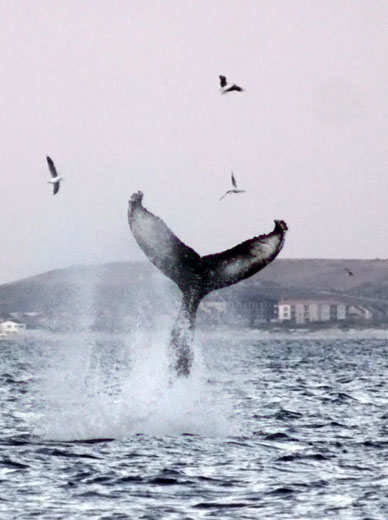
The best-known season runs from June to November, when southern right whales gather along the southern Cape coast to give birth, mate and nurse their calves. During the same period, humpback whales migrate both north and south along the east and west coasts.
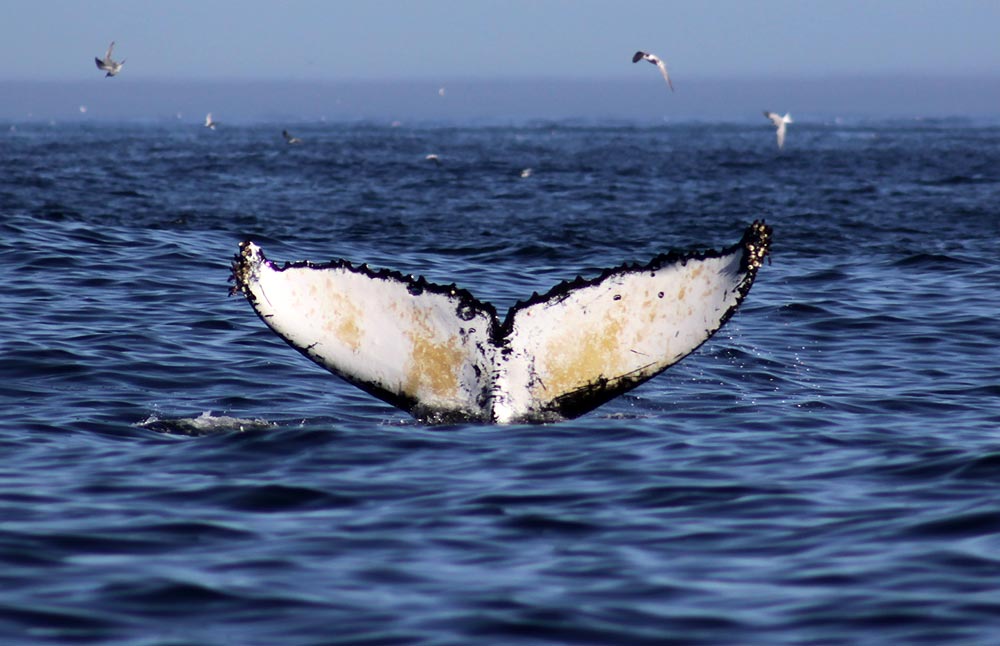
Summer brings a different pattern. The productive Benguela upwelling system along the West Coast supports feeding aggregations of humpback whales and also attracts southern right whales, a lesser-known part of their seasonal distribution in South African waters. Bryde’s whales may be encountered throughout the year in most regions.
The traditional view that winter is South Africa’s only significant whale-watching season falls far short of the full picture.
Whale Watching Regions in South Africa at a Glance
Compare coastal regions, whale species and seasonal sightings
| Region | Best known for | Main season | Best viewed |
|---|---|---|---|
| Cape West Coast | Summer feeding humpback whales | October to March | Specialist boat trips |
| Cape Town and False Bay | Winter & summer feeding humpback whales southern rights and Bryde's | June to November, with some summer opportunities | Land and boat |
| Hermanus and Walker Bay | Southern right whales close to shore | June to November | Land and licensed boat trips |
| De Hoop and Witsand | Southern right whale calving and nursing areas | July to November | Mainly land-based |
| Garden Route and Plettenberg Bay | Southern right whales, migrating humpbacks and dolphins | June to November | Land and licensed boat trips |
| Algoa Bay | Whales, dolphins and wider marine wildlife | Seasonal whale migrations with year-round marine wildlife | Boat-based |
| Wild Coast | Northbound and southbound humpback whale migrations | June to November | Land-based viewing and specialist boat trips |
| KwaZulu-Natal | Migrating humpback whales and dolphins | June to November | Land and boat |
Seasons are approximate and sightings vary between years. This table is a broad planning guide rather than a guarantee of when or where whales will be present.
Land-based Whale Watching in South Africa
Where can you watch whales from the shore?
South Africa offers exceptional land-based whale watching opportunities as major migration routes and sheltered breeding areas pass close to an elevated coastline in many areas. Headlands, cliff paths and coastal roads allow patient observers to watch whales without needing to approach by boat.
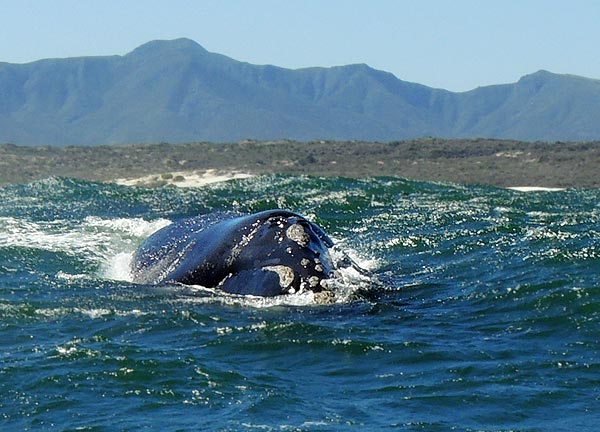
Hermanus is the best-known destination for land-based viewing. Southern right whales often enter the coves of Walker Bay during winter and spring, sometimes resting close beneath the cliff paths. Its accessible viewpoints and annual whale festival have helped establish the town as the whale-watching capital of South Africa but the southern right whale nursery extends well beyond Hermanus.

Further east, The De Hoop Nature Reserve with its Whale Trail and St Sebastian Bay, include some of South Africa’s most important calving and nursing areas. The annual aerial surveys show that highest concentrations of mothers and calf pairs are usually concentrated between Witsand, De Hoop and Arniston.
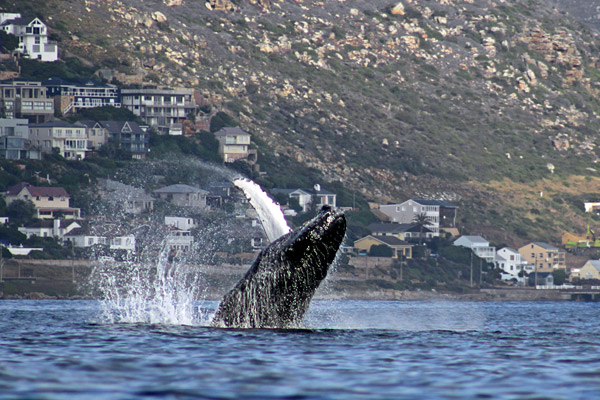
Cape Town itself is a city surrounded by the sea on three sides, so almost any tour around the Peninsula can pass through potential whale-watching areas. Elevated viewpoints around False Bay, the Cape Peninsula and Chapman’s Peak Drive may reward a patient observer with a whale blow or breach.
The Wild Coast offers a different experience. High cliffs around Coffee Bay and Port St Johns overlook the humpback migration route. Their northward movement in June/July coincides with the annual Sardine Run although technically unrelated.
During the southward migration, Oceans Africa has incidentally observed mothers and calves lingering in pockets of warmer coastal water, possibly allowing calves additional time to nurse and build strength before continuing south.
Land-based whale watching rewards the patient observer. A distant blow, a sequence of breaches or the slow movement of a mother and calf along the kelp fringes can reveal a great deal of nuance when watched without haste and interruption.

Boat-Based Whale Watching South Africa
Where to go Boat-Based Whale Watching?
Boat-based whale watching in South Africa is a regulated activity carried out by licensed operators within defined areas.
Licensed whale-watching trips are available in most coastal areas. When conducted with sensitivity and care, they offer the chance of a more direct encounter in which the whales’ size, sound and behaviour are experienced in a powerful and intimate way.
The Whales and Dolphins of South African Waters
What Cetacean Species Can We Encounter in South Africa?
South Africa’s best-known whales and dolphins are only the most visible members of a much larger cetacean community. Some species are familiar coastal visitors, while others keep far offshore, or remain rare and elusive.
The sections below introduce the whales and dolphins most relevant to coastal viewing, together with some of the less frequently encountered species that hint at the true scale of South Africa’s marine diversity.
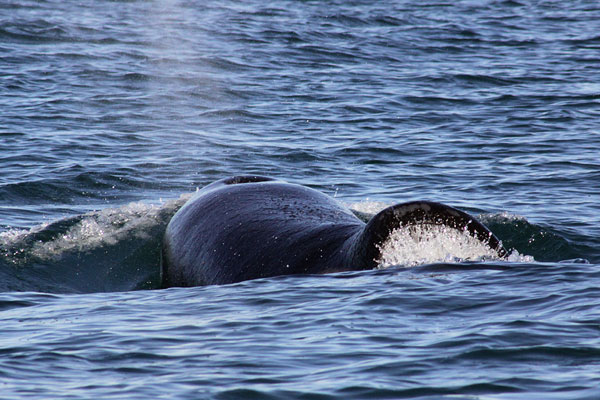
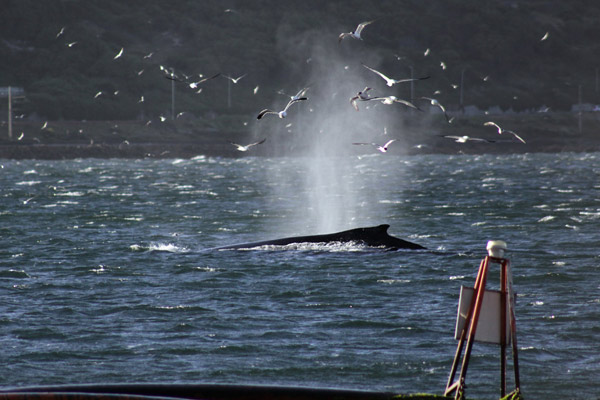
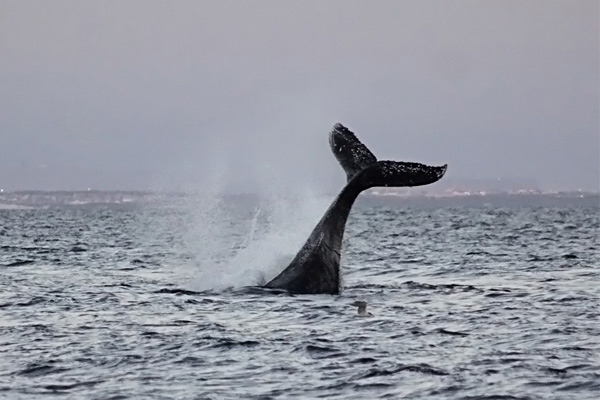
Southern Right Whales
The Right Whales To Watch!
Southern right whales are the species most closely associated with winter whale watching along the southern Cape coast. They enter sheltered bays to mate, give birth and nurse their calves, often remaining close enough to shore to be watched from cliffs, beaches and coastal paths.
Their distribution extends beyond Hermanus through the nursery areas of the southern Overberg, Garden Route and parts of the Eastern Cape.

Southern right whales also occur in feeding areas along the West Coast during summer, a less familiar part of their life in South African waters.
Annual aerial surveys have documented a substantial recovery since commercial whaling, but recent research shows considerable changes in body condition, calving intervals and the number of whales returning to the coast each year.

Humpback Whales in South Africa
Great Migrations and Feeding Aggregations
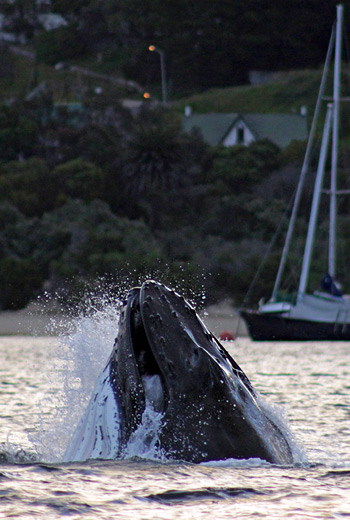
Humpback whales migrate along both the east and west coasts of South Africa between feeding grounds and tropical breeding areas. The north-east migration is most noticeable during winter, followed later in the year by returning adults, mothers and calves.
They are recognised by their long pectoral fins, energetic surface behaviour and complex songs. The Wild Coast and KwaZulu-Natal overlook one of the major migration corridors, while large feeding aggregations may develop along the Cape West Coast during summer.
The Wildcoast is perhaps one of the best places for observing humpback whales in South Africa as literally hundreds of whales pass by daily. Migrating humpback whale population esimates from land based surveys in KwaZulu Natal aggregated daily sightings across the season resulting in annual relative abundances of 11,098 humpback whales in 2018 and 13,485 in 2019
These migrating whales use the inshore currents to their advantage and can be easily spotted from the high cliffs of the Wildcoast. The winter migration of humpback whales also coincides with the annual sardine run, so booking a sardine run tour with us is one of the best ways to experience this spectacle.
Bryde's Whales in South Africa
Resident Whales of South African Waters
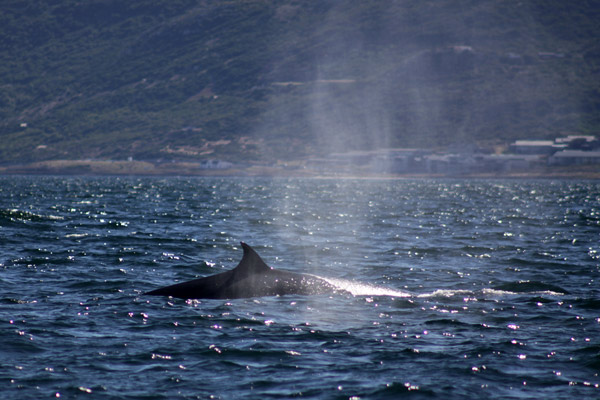
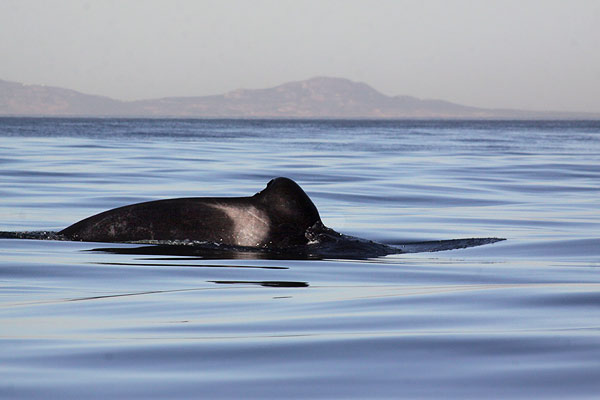
Bryde’s whales are present in South African waters throughout the year and are closely associated with productive feeding areas. The inshore population occurs mainly over the Agulhas Bank, while offshore Bryde’s whales range more widely.
They are less predictable from land than southern right or migrating humpback whales, but may be encountered during boat trips where sardines, anchovies and other schooling fish are concentrated.
Other Whales and Dolphins Seen in South Africa
Offshore Species and Less Predictable Encounters
South Africa’s deep offshore waters support sperm whales, pilot whales, beaked whales and several species of rorqual. Blue, fin, sei and minke whales are recorded less frequently and are seldom the focus of conventional coastal whale-watching trips.
These species contribute to South Africa’s exceptional cetacean diversity, although many occur far offshore or are known mainly through research surveys, acoustic monitoring and occasional strandings.

What kinds of Dolphin species can be found in South Africa?
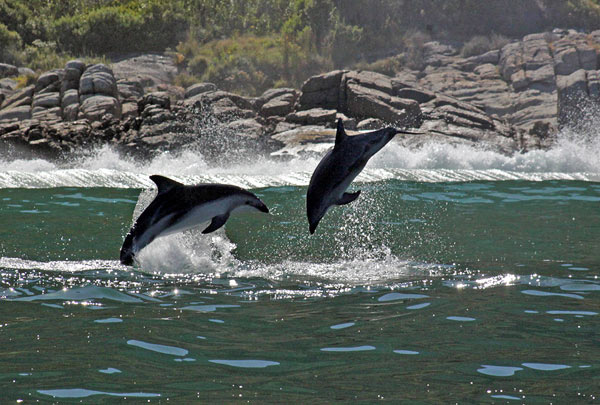
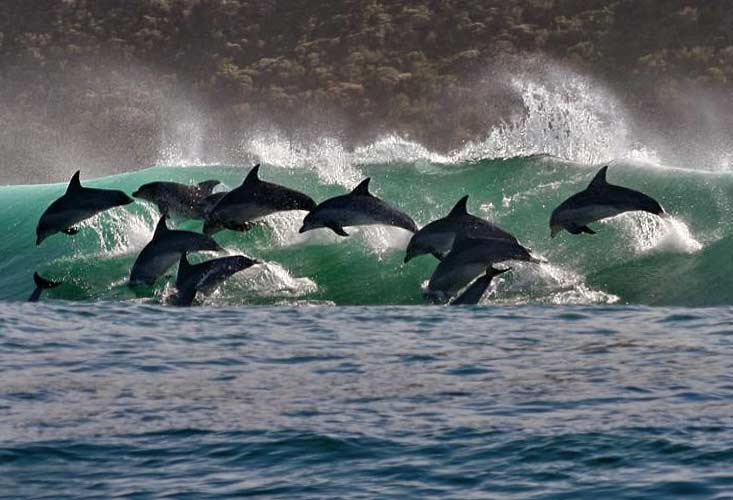
Dolphins may be found the year round in all coastal areas.
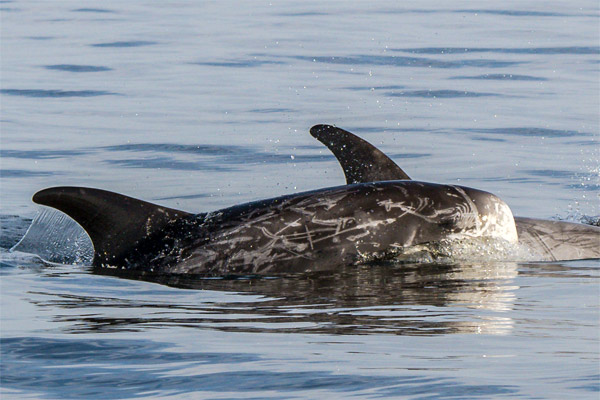
Bottlenose dolphins are present in large groups in all areas East of Cape Town. Common dolphins are also found in most regions where they tend to stay further offshore, in search of anchovy and sardine.
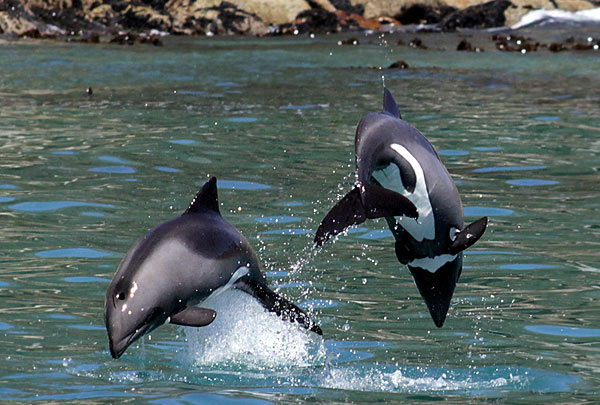
Other species of dolphin found in South Africa include humpback dolphins, Heavyside’s, spinner and dusky dolphins.

Choosing Where to Watch Whales in South Africa
Which Whale-Watching Region Is Right for Your Trip?
South Africa’s whale-watching regions differ considerably in geography, species and type of experience.
The Western Cape has its sheltered nursery areas and summer feeding grounds. Further east, the Garden Route, Wild Coast and KwaZulu-Natal overlook the great humpback migration against a backdrop of high cliffs, open beaches and remarkably undeveloped coastline. Between them lies Algoa Bay, an ecological gem on the edge of the greater Addo Elephant Park and a stronghold for bottlenose dolphins. The Alexandria Dune Fields and St Croix Island form the backdrop, while nearby deep-water canyons bring the possibility of sperm whales and other less frequently encountered cetaceans.
These possibilities form part of a much larger African journey, where wild unspoilt coastline, marine life and the African bush can all be combined into a diverse and multi-layered wildlife experience. To experience South Africa fully is to understand that elephants and whales are part of the same ancient story.
Need Help Choosing Where To Go Whale Watching in South Africa?
Oceans Africa has been helping travellers plan whale-watching experiences around South Africa for more than two decades. If you would like help comparing the options, get in touch and we can work through what best fits your trip.
Dates, whale movements, sea conditions and the rest of your itinerary can all influence which area makes the most sense. Oceans Africa can help you compare the regional options and build whale watching into your South African journey.
WhatsApp Now!
For latest whale sightings and availability