

Close-Encounter Whale-Watching in South Africa
A Practical Guide to Licensed Whale-Watching Trips
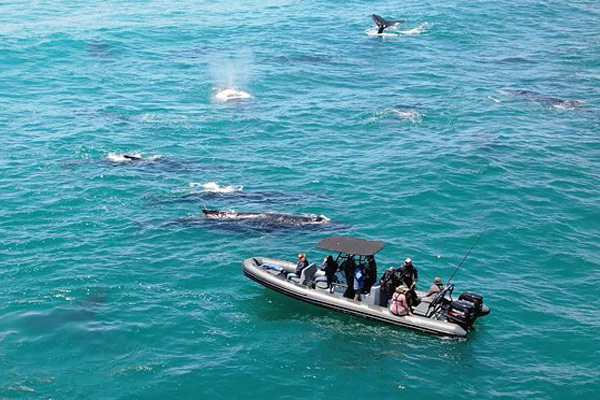
Boat-based whale watching offers a very different perspective from seeing whales from land. It places you within the wider marine environment and may provide opportunities to observe whales travelling, socialising, feeding or resting offshore.
In South Africa, commercial close-approach whale and dolphin watching is highly regulated. Licensed operators work within designated areas and under permit conditions intended to protect the animals while allowing visitors to experience them at sea.
This guide explains how licensed whale-watching trips operate, what visitors should realistically expect and how to choose an experience that fits with their travel plans.
What to Expect from a Licensed Whale-Watching Trip
You Are Booking the Opportunity, Not the Performance
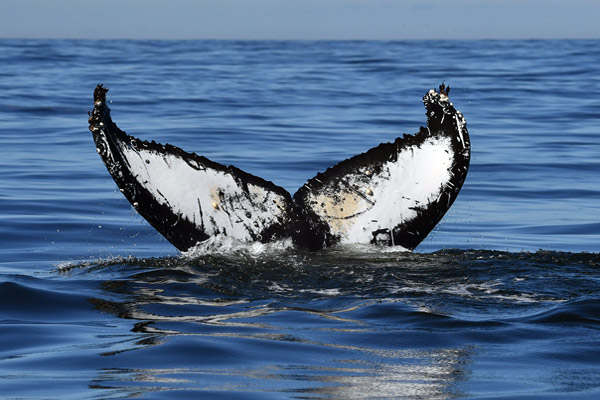
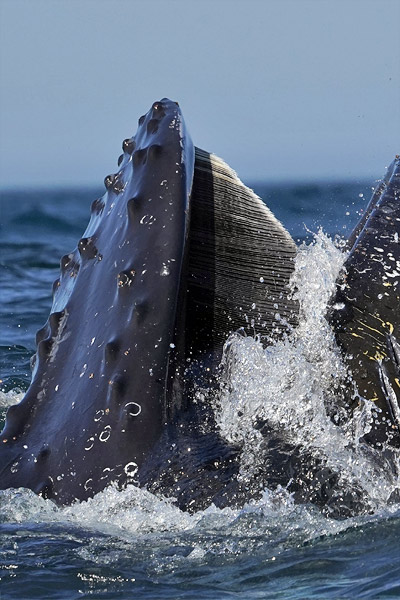
Boat-based whale watching is often sold as a bucket-list experience, but wild animals do not perform on demand. Most whale watching trips require patience and there’s always an element of luck. Whales may be present in the area but intent on travelling, resting or spending long periods below the surface. On other days they may breach repeatedley, tail slap or display powerful surface behaviour.
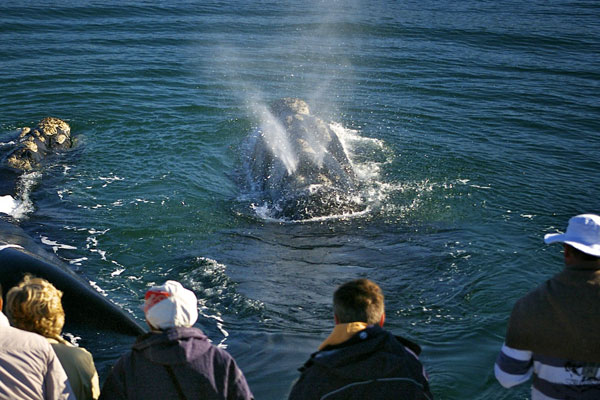
The most memorable encounters happen when a whale chooses to approach and investigate the boat. That is a genuine interaction, initiated by the animal, but it is rare. The experience can therefore range from slow and frustrating to overwhelmingly powerful, often switching between the two with very little warning.
The real value of a whale watching trip lies in the opportunity to approach these animals responsibly, enter their environment and see what experience develops while accepting the uncertainty that comes with observing wildlife on its own terms.
Why Do Whale-Watching Permits Matter?
Whale Watching Is Part of a Wider Marine Experience
At Oceans Africa, we consider whale watching to be part of a wider marine experience that may also include dolphins, seals, seabirds, sharks and other wildlife.
However, if you want to specifically approach whales and spend time observing them at close range, you need to book a dedicated close-encounter tour with a licensed boat-based whale-watching operator.
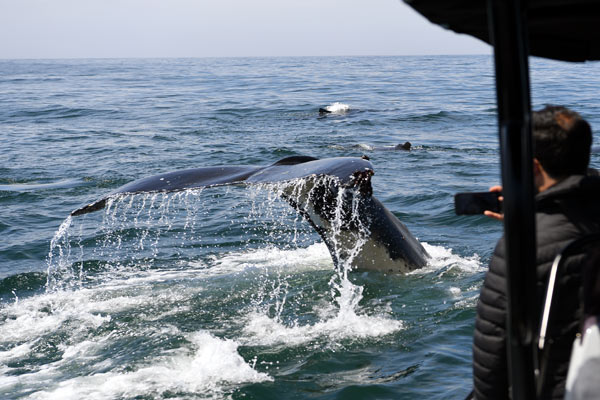
Any vessel operating a snorkeling, diving, fishing or scenic trip might encounter whales at sea, but without the appropriate permit they may not actively approach, follow or reposition around the animal to create or prolong a close encounter.
A licensed whale-watching trip will naturally focus most of its time and effort on locating and observing whales. Other wildlife may be encountered along the way, but there is often limited time to explore every opportunity once whales have been found.
The right choice depends on what you want from the trip. Choose a licensed whale-watching tour when whales are your clear priority. If you are more interested in the wider marine environment and want the flexibility to respond other wildlife, a broader marine safari may be the better option. Some visitors may find that booking both provides the most complete experience.
Responsible Boat-Based Whale Watching
The ethics of Boat-Based Whale Watching
Boat-based whale watching can be conducted responsibly when it is properly regulated and the animals’ welfare remains the priority.
Whales and dolphins are highly aware of vessels around them and may respond in different ways. Some move away or alter their direction, speed or behaviour, while others may even get curious and choose to approach. The response is influenced by many factors such as vessel speed, noise, proximity, crowding and the length of the encounter.
The commercial pressure to deliver the close encounter passengers expect, can sometimes conflict with the patience and distance responsible viewing requires. Passengers can support more responsible tourism by choosing licensed operators and valuing natural behaviour over forced encounters.
The permit system creates the legal framework for an ethical close-encounter whale-watching experience. It does not replace the need for good judgement. The quality of the experience still depends on the skipper’s understanding of whale behaviour, the way the vessel is handled and the sensitivity to give animals space when needed.
Boat-Based Whale Watching Areas in South Africa
Where to Go Boat-Based Whale Watching in South Africa?
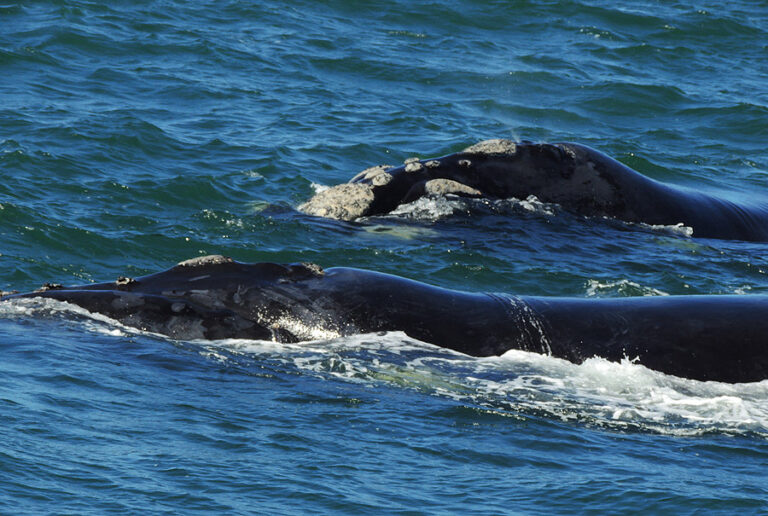
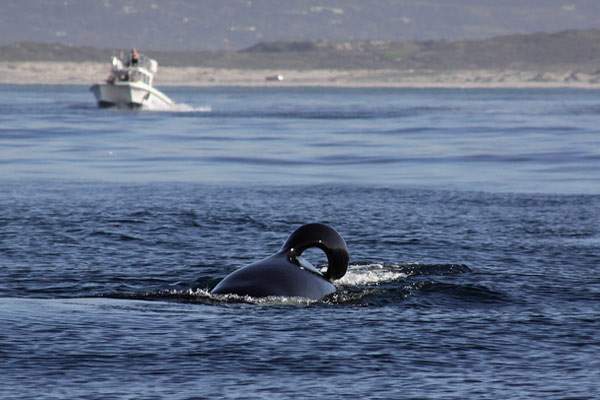
South Africa has licensed boat-based whale-watching departures from Simon’s Town, Hermanus, Gansbaai, Plettenberg Bay, Algoa Bay and parts of KwaZulu-Natal. False Bay and Walker Bay are best known for seasonal southern right and humpback whales, while the Garden Route adds further opportunities to see both species alongside resident dolphins and Bryde’s whales.
Algoa Bay offers exceptional marine diversity, and deeper waters beyond the bay and near the offshore canyon bring the exciting possibility of encountering sperm whales as well as other less frequently seen cetaceans. Along the KwaZulu-Natal coast, trips are largely centred on the winter humpback migration.

Planning a Boat-Based Whale-Watching Trip
Practical Questions Before You Go
Boat-based whale-watching trips vary in vessel size, comfort, accessibility, launch method and the way encounters are managed. The questions below cover some of the practical details worth understanding before choosing a trip, including seasickness, permits and what to expect once you are on the water.
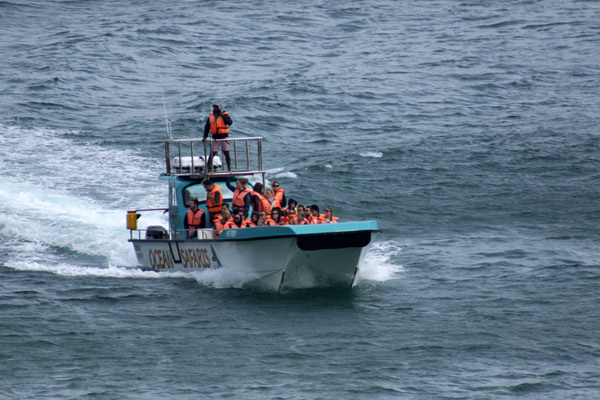
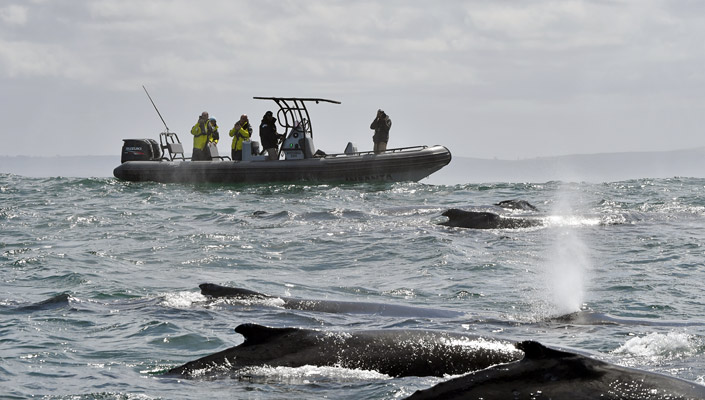
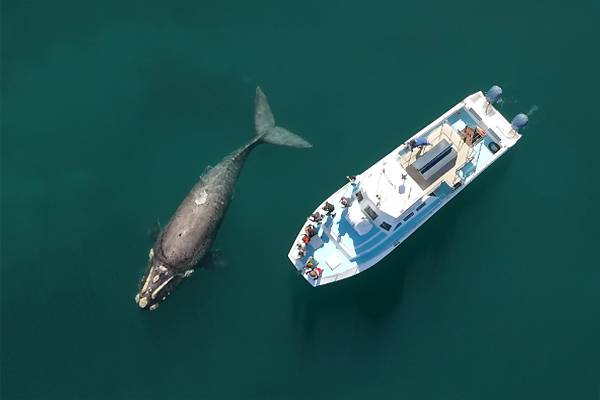
Whale-watching boats range from small vessels carrying around 8 to 12 passengers to much larger boats accommodating 50 or more.
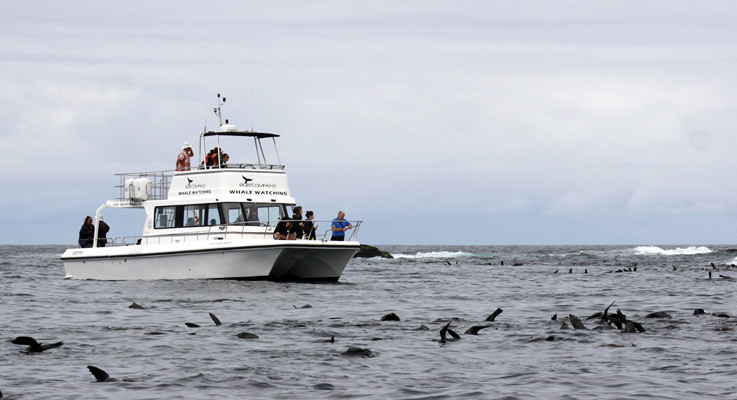
Larger vessels can are usually twin-hulled catamarans, with more space, stability and cover. Some have raised viewing decks, cabins and onboard toilets, while smaller boats may offer a more personal experience and a lower viewing height their operating weather window is usually smaller.
A South African Boat-Based Whale and Dolphin Watching permit allows an authorised operator to deliberately locate and approach whales and dolphins within a designated operating area.
Licensed operators may approach whales under their permit conditions to winin 50m and must follow the rules governing distance, boat speed, mother and calf pairs, viewing time and repeat approaches.
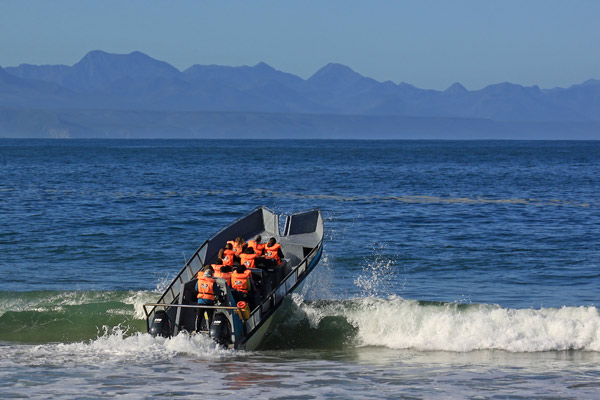
Disables access varies between vessels and departure points. Some boats are boarded directly from a harbour dock or jetty, while others are launched from a slipway. At destinations such as Plettenberg Bay, boats may launch directly from the beach through the surf.
The height of the step onto the boat, movement between the dock and vessel, access to seating and availability of shelter can all be important. Larger boats are not automatically easier to board, so passengers with limited mobility should ask about the complete boarding and launch procedure before booking.
No operator can guarantee the behaviour or location of whales.
Licensed operators use local knowledge and experience to improve the chances of finding whales, but proximity and the quality of an encounter cannot be promised.
Many companies offer a return voucher if whales are not sighed during their whale watching trip. .
e.
In 2026, standard boat-based whale-watching trips generally cost between ZAR 1,400 and ZAR 2,000 per adult, depending on the destination, operator and duration.
Most operators offer reduced rates for children under 12. Group rates may be available on transfers, guided day tours and multi-day packages, but discounts on scheduled boat trips are less common because places are limited. For larger groups, a private charter may offer better value and flexibility.
Oceans Africa will assist with comparing current rates, child policies, group options and the most suitable tour for your travel plans.
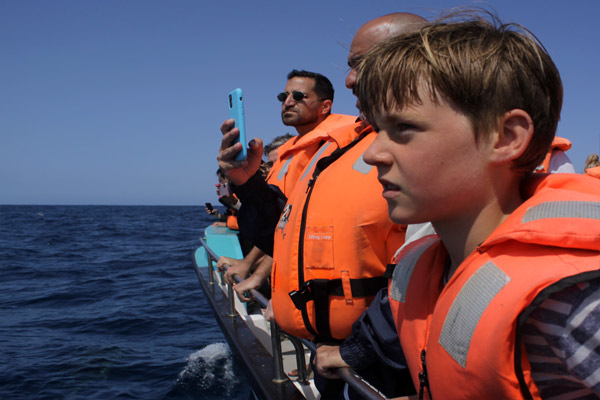
Most operators do not have an age restriction, however adult supervision is required. All children under 12 years old must wear a life jacket at all times.
If your child is an infant, notify us in advance of your trip to ensure correct life jacket sizing.
Even on a hot sunnny day you can get cold out on the water. Wear warm layers, a wind-resistant jacket and closed, non-slip shoes.
It is also useful to bring sun protection, sunglasses, a hat. Keep personal items in a small secure bag and bring suitable protection for camera equipment where necessary.
Some boat based whale watching areas are fully booked several weeks in advance during peak season. We recommend securing your booking as early as possible, particularly for Hermanus, weekends and larger groups.
Oceans Africa are here to help secure your booking.
Anyone can become seasick, especially on whale watching trips when the boat has to remain stationary around animals for long periods. Although some people are more susceptible than others, the likelihood depends on the sea conditions, vessel type and your own sensitivity to motion. Looking through cameras and binoculars while on-board can also be a contributing factor.
If you are concerned, speak to a pharmacist about suitable medication before the trip. Seasickness medication needs to be taken well in advance rather than after symptoms have already started.
Many of these medications can cause drowsiness or reduced concentration. Follow the pharmacist’s advice and the instructions supplied with the medication, and do not drive if it affects your alertness.
A transfer or guided day tour can be a sensible option if you expect to be tired after the boat trip or are taking medication that may affect concentration.
Boat-based whale watching is weather dependent, and trips may occasionally be cancelled at short notice. If rescheduling is not possible all operators offer a full refund should the trip cancel due to weather or rough sea.