Feeding Humpback Whale Supergroups

Feeding Humpback Whale Supergroups in Cape Town South Africa

Feeding Humpback Whale Supergroups

Want to see Humpback Whales near Cape Town?

WhatsApp Now!

Humpback whales (megaptera novaeangliae) have always passed the Cape on their long migrations, but in recent years we have seen increacingly large groups of whales gathering to feed both during Winter and Summer. These events are driven by seasonal upwellings in Summer, and by concentrated baitfish in Winter.

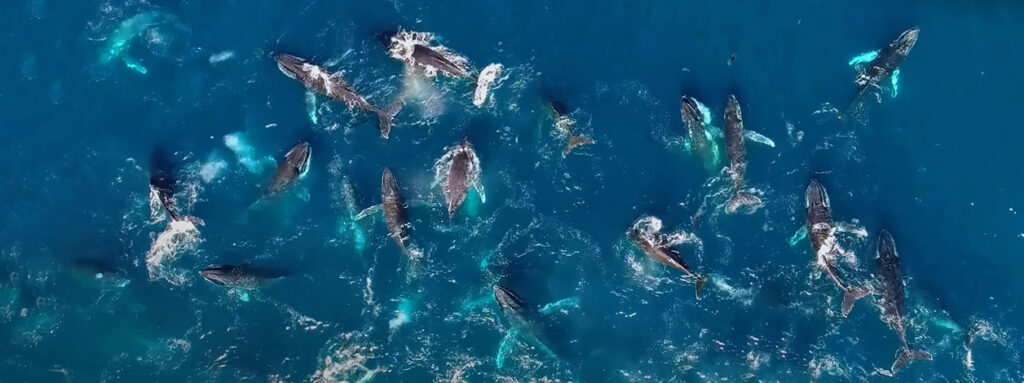
These conditions create pockets of high productivity that the humpback whales exploit when prey becomes concentrated and may indicate a return to pre-whaling feeding grounds or signal a search for new feeding areas. When this happens, the whales can gather in numbers quickly, sometimes forming what researchers refer to as super groups, with aggregations of whales anywhere between 20 and 200 animals. For anyone on the water, encountering these feeding humpback whale supergroups is without doubt one of the most striking wildlife spectacles you can encounter anywhere on the planet!

Rated 5 out of 5
Feeding Humpback Whales
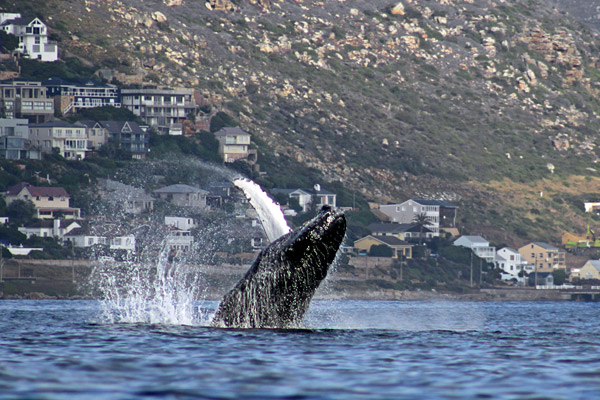
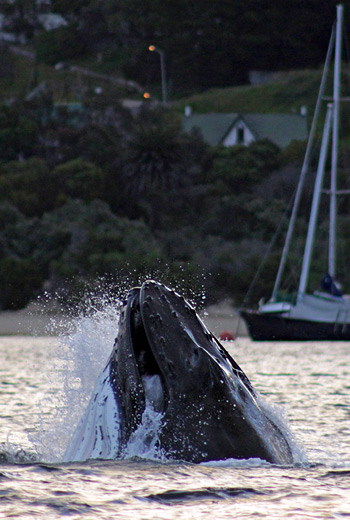
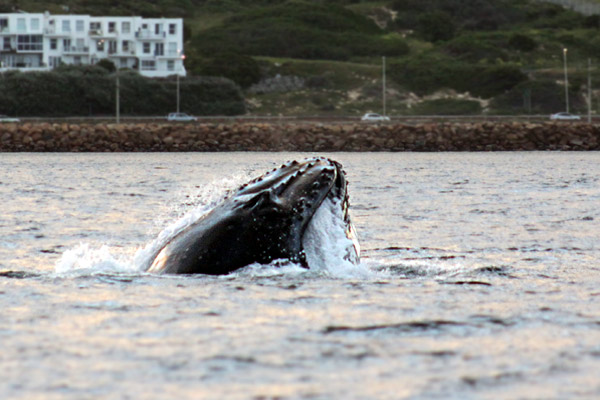
A humpback whale lunge feeds in Simonstown

Feeding whales in False Bay

Winter feeding whales in Simonstown

Winter feeding events in False Bay have become more noticeable over the past several years, with humpback whales concentrating around shoals of baitfish in the bay. 2024 saw a spectacular event in Simonstown and Fish Hoek. Over a three month period from August more than 50 individuals were recorded as multi-day feeders across the inshore sections of False Bay.

In 2025, the distribution shifted offshore, with high concentrations of whales recorded near Whittle Rock and the deeper central basin of False Bay. These shifts reflect how fluid the local prey dynamics can be. When baitfish schools move, the whales adjust quickly, often relocating in a short amount of time.

Much of what we know about these movements comes from citizen science contributions. Platforms such as HappyWhale and organisations like SeaSearch have been collecting data from water users and general public observers all around the coastline. 

The combination of public sightings and ID work shows the same feeding individuals returning to the bay across different seasons. These records, together with estimates of group size and distribution, have helped build a clearer picture of how humpbacks are using False Bay in winter and how these feeding events fit into their broader movements  along the South African coast.

Winter feeding in False Bay remains unpredictable, but when baitfish are present the behaviour is easy to recognise, with concentrated groups of whales working a defined area and surface activity focused around moving shoals.

For visitors looking for whale watching opportunities along the coast, the feeding behaviour of southern hemisphere humpback whales stands apart from the calving and mating patterns of southern right whales in Hermanus and De Hoop. It adds a broad behavioural dimension to any local whale watching tour or multi-day package.

Summer feeding whales

West coast feeding whale agregations

Summer aggregations of feeding humpback whales typically occur between November and  April. This low-latitude feeding behaviour is linked to Benguela current upwelling, raising nutrient-rich water from deeper layers. The process fuels high rates of phytoplankton blooms which are the primary drivers for krill concentrations in this productive system. 

Although the exact locations vary and shift there are several areas recognised hot-spots. Table Bay, the Dassen Island to Robben Island area, and the coast between Llandudno and Hout Bay.

For whale watchers, this summer feeding behavior offers an altogether  different viewing experience to the typical transitory encounters, with whales remaining in the area for much longer while prey is available. 

If you are planning a whale watching trip to Cape Town and would like the latest updates on recent activity around Hout Bay or Yzerfontein, we invite you to contact us at Oceans Africa so we can advise on the latest sightings, availability and conditions. We will happily guide you to wherever the best whale watching opportunities may be.

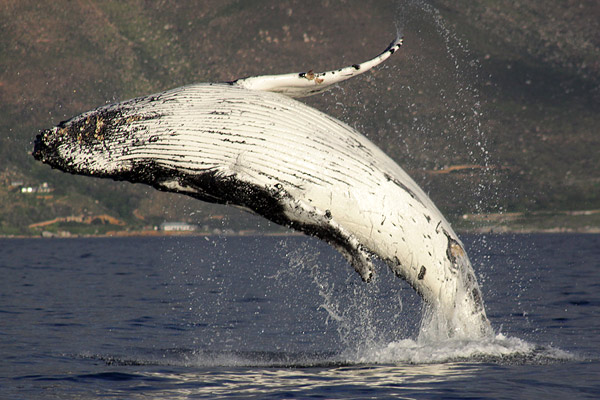
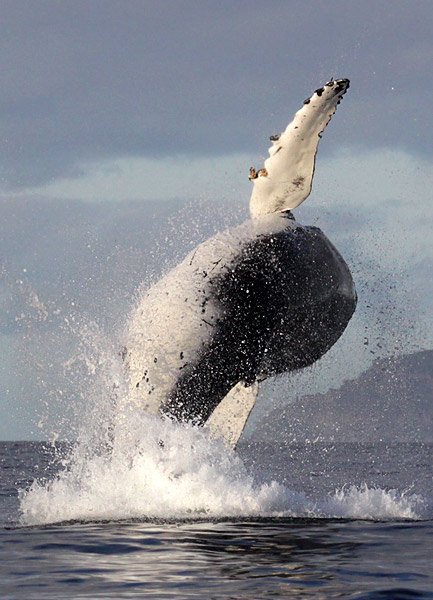
Breching Humpback Whale in False Bay
A humpback whale brech near Cape Point
Feeding Humpback Whale Supergroups
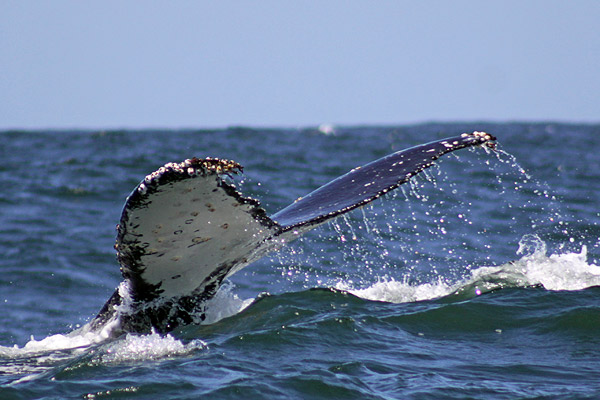
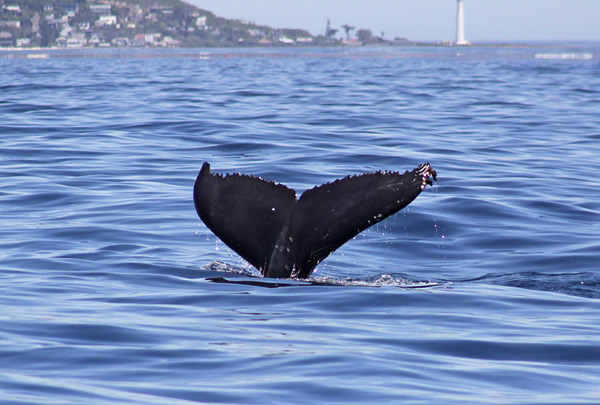
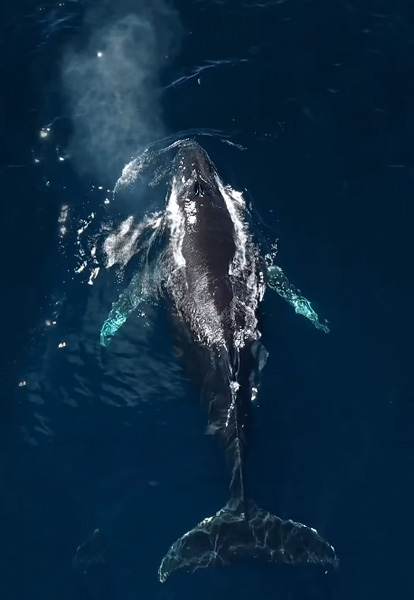
Humpback Whale Surfacing

Humpback Whale Supergroups

Feeding Humpback Whale Supergroups

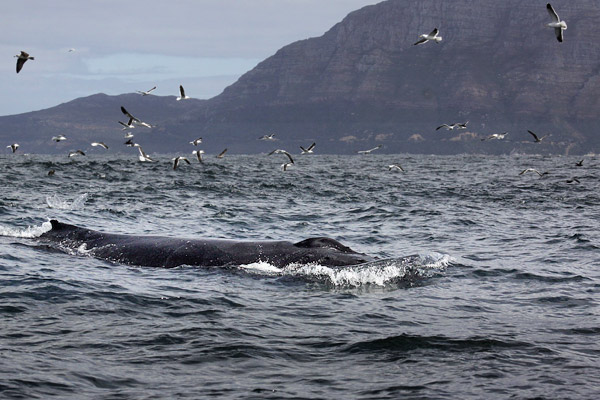
The most notable humpback whale activity along the South African coast has come from the West Coast and Cape Peninsula, where large feeding aggregations known as supergroups have been recorded in recent seasons.

A supergroup is generally defined as an aggregation of 20 or more humpback whales feeding within close proximity, and under favourable conditions these groups can expand to several dozen or even more than a hundred individuals.

Feeding humpback whale supergroups have been observed from Cape Point through Hout Bay, Yzerfontein, Dassen Island and into the wider St Helena Bay region. Recent field data highlight how substantial these events can be, with the 2024/25 season producing over a thousand individually identified humpbacks across multiple encounters and several days with more than 100 whales feeding in the same area. Repeat sightings of identifiable individuals also suggest that certain whales return to these productive zones across the season.

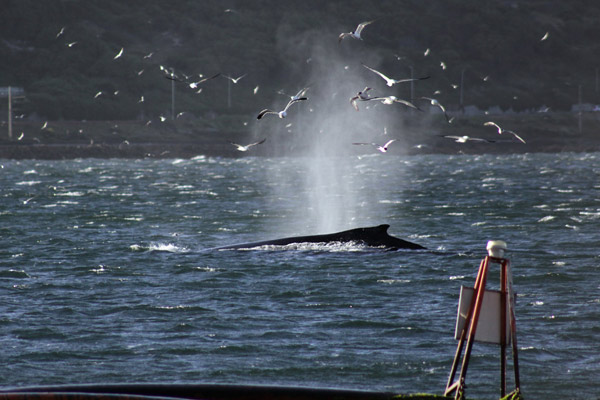
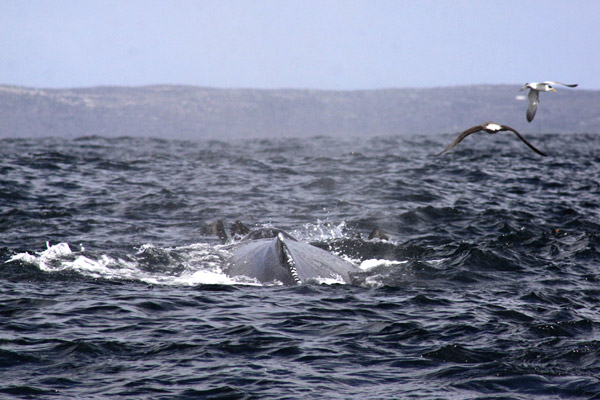
Feeding behaviour within a humpback whale supergroup depends on the depth of the prey. When prey rises toward the surface, feeding becomes highly visible, with repeated surfacing, directional changes and concentrated bird activity. When prey holds deeper, whales feed in a more dispersed pattern with longer dive times and wider spacing, although the number of whales present still indicates a significant aggregation.

These events remain entirely dependent on conditions, but when they occur they reveal how actively humpback whales use the productive waters off Hout Bay and the West Coast.

As feeding humpbacks become a consistent seasonal feature, South Africa now presents a rare combination of whale behaviours across the whole year. Feeding, migration, calving and mating all occur along the same stretch of coastline, making the Western Cape region of South Africa one of the most complete and premium whale-watching destinations in the world.

Humpback Whale Tours

Choose your whale watching tour or boat charter!

Oceans Africa specialises in whale watching tours and private boat charters throughout Southern Africa. Choose a whale watching tour or charter from the options below and send us your dates to check rates and availability, or email us with your plans and we’ll design a tailored whale watching package for you.

Whale Watching Tour Cape Town

Whale Watching Tour Cape Town

Whale Watching Tour Cape Town Cape Town Whale Watching Full Day Tour Enquire Now Boat and land -based whale watching day tour Cape Town  Full day tour ZAR 4 200 per person (min 2 adults) Group rates on request. Embark on a breathtaking whale watching tour around the Cape Town Southern Peninsula!  Don’t miss the

Read More »
Whale watching Cape Town to Hermanus

Whale Watching Day Tour Cape Town – Hermanus

Whale Watching Day Tour Cape Town to Hermanus Whale Watching Tour Boat and land -based whale watching day tour Cape Town – Hermanus – Cape TownFull day tour ZAR 4 500 per person (min 2 adults) Group rates on request. Embark on a breathtaking whale watching tour from Cape Town to Hermanus, the whale-watching capital

Read More »
Custom Tours South Africa

Custom Tours

Get an instant tour quotation! Custom Tours “Never go on trips with anyone you do not love.” ― Ernest Hemingway Want to create you own custom tour package? Complete the fields below for instant tour estimates! Design your dream holiday package and receive and instant custom tour quotation. This form is designed to streamline the

Read More »
Cape Point Boat Charter

Cape Point Ocean Safari

Cape Point Ocean Safari Explore Cape Point by Sea on our boat Sea Otter Book Now Join us for an extraordinary journey with our Cape Point Ocean Safari  and immerse yourself in the breathtaking beauty of the Cape Peninsula from the sea. View the magnificence of Cape Point from the same perspective as the early

Read More »
Scroll to Top